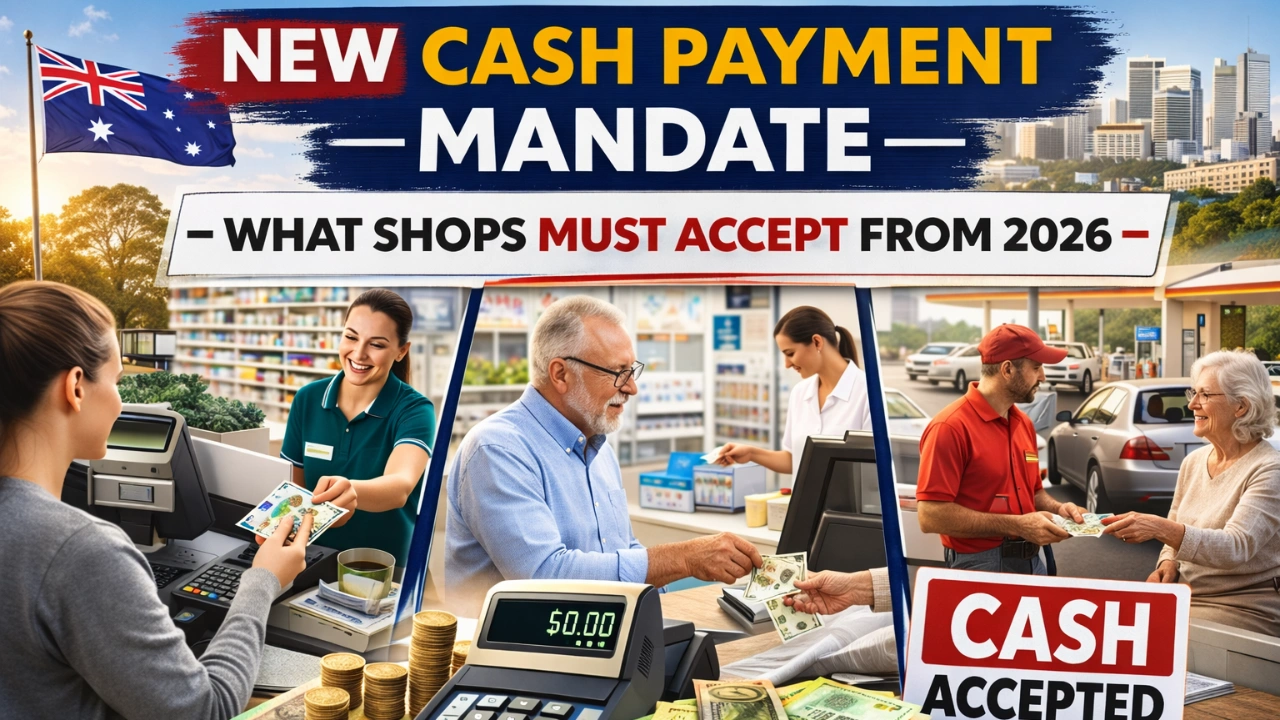
For years, Australians have grown used to tapping cards and phones at the checkout. But from 2026, the humble banknote could regain new legal power.
The federal government has announced plans for a cash payment mandate, ensuring that certain businesses must continue accepting physical cash for everyday transactions. The move is designed to protect vulnerable Australians and safeguard payment choice as digital systems expand.
Here’s what the proposed 2026 cash rules mean for shoppers and businesses across Australia.
What’s Changing From 2026?
Under the proposed mandate, many businesses will be required to accept cash for essential goods and services.
Key features expected in 2026 include:
- Mandatory cash acceptance for essential retail businesses
- Coverage likely to include supermarkets, pharmacies, petrol stations, and medical services
- Exemptions for very small businesses or temporary outages
- Online-only businesses not required to accept cash
- Enforcement mechanisms and potential penalties for non-compliance
The policy aims to ensure Australians are not excluded from participating in the economy if they rely on physical currency.

Why the Government Is Introducing a Cash Mandate
Although cash use has declined significantly in the past decade, millions still depend on it.
Recent national data shows that while digital payments dominate overall transactions, cash remains important for:
- Older Australians
- Rural and remote communities
- People without reliable internet access
- Individuals escaping domestic violence who need financial privacy
- Budget-conscious households managing spending
Treasury officials have argued that access to cash is about resilience and inclusion.

One senior official stated, “Cash remains legal tender. Australians should not be refused essential goods simply because they choose to pay with banknotes.”
What Shops Will Be Affected?
The mandate is expected to focus on essential service providers rather than all retailers.
Likely businesses required to accept cash:
- Major supermarket chains
- Pharmacies
- Fuel retailers
- Medical clinics
- Utility service counters
Luxury retailers, boutique stores, or fully digital businesses may not be covered under the same rules.
The final list of covered sectors will be confirmed closer to implementation in 2026.
What Businesses Must Do
Businesses falling under the mandate will need to:

- Maintain the ability to process cash payments
- Keep sufficient change available
- Display clear signage if temporary outages occur
- Ensure staff are trained to handle cash securely
Failure to comply could result in regulatory action once enforcement guidelines are finalized.
What This Means for Consumers
For shoppers, the biggest change is clarity: if a store provides essential goods, it will not be able to refuse cash payments without valid reason.
Consumers can expect:
- Greater payment choice
- Protection during digital outages
- Continued access for those without bank accounts
- Improved financial inclusion for vulnerable groups
The policy also strengthens economic resilience during cyber incidents or payment system failures.
How This Compares to Current Practice
| Current Situation (2025) | Proposed 2026 Rules |
|---|---|
| Businesses can refuse cash (unless otherwise required by contract) | Essential businesses must accept cash |
| No universal mandate | Targeted mandate for essential sectors |
| Cash acceptance varies widely | National standard framework |
| Digital payments dominate | Payment choice legally protected |
Currently, businesses can refuse cash unless a prior agreement exists. The 2026 framework would significantly change that for certain sectors.
Economic and Social Impact
Australia has seen cash usage fall to below 15% of in-person transactions in recent years, compared to over 60% a decade ago.

However, surveys show that a significant minority of Australians still rely on cash for weekly spending.
Financial inclusion advocates argue that removing cash acceptance risks widening inequality. Meanwhile, some business groups have raised concerns about security and handling costs.
The government has indicated it is balancing both concerns by limiting the mandate to essential services.

What You Should Know Before 2026
If you are a consumer:
- You will retain the right to pay cash at essential retailers.
- Online-only purchases will still require digital payment.
- Limits on large cash transactions may still apply under anti-money laundering laws.
If you are a business owner:
- Review whether your sector is classified as “essential.”
- Prepare for compliance updates and operational adjustments.
- Monitor government guidance as implementation details are finalized.
The mandate is expected to come into effect sometime in 2026, following consultation and legislative processes.
Frequently Asked Questions (Q&A)
1. When will the cash mandate begin?
The policy is expected to take effect during 2026, pending legislation.
2. Will all businesses have to accept cash?
No. The focus is on essential goods and services.
3. Can a café refuse cash?
It depends on whether the café is classified as an essential service under final rules.
4. What counts as essential services?
Likely supermarkets, pharmacies, fuel stations, and medical providers.
5. Can online stores refuse cash?
Yes. The mandate applies to physical retail settings.
6. Will there be penalties for refusing cash?
Yes, enforcement provisions are expected for non-compliance.
7. Does this change legal tender rules?
It strengthens practical enforcement of legal tender for essential transactions.
8. Are there limits on how much cash I can pay?
Existing anti-money laundering limits and reporting requirements may still apply.
9. Why is the government doing this now?
To ensure inclusion and economic resilience as digital payments expand.
10. Does this mean digital payments are being restricted?
No. Digital payments will continue to dominate everyday transactions.
11. What about rural areas?
The mandate is partly designed to protect access in remote communities.
12. Will this increase prices?
There is no confirmed evidence that it will significantly raise consumer prices.
13. What if a business has no change?
Temporary operational issues may be addressed in compliance guidance.
14. Can businesses charge extra for cash payments?
Details will depend on final legislation and consumer law provisions.
15. Will this apply nationwide?
Yes, the framework is intended to be national.
From 2026, Australians may see a shift back toward guaranteed payment choice in essential settings. While digital payments continue to grow, the government’s message is clear: cash is not disappearing — and for key transactions, it will remain protected by law.




Leave a Comment